NTC Featured Courses
Our specialized courses
We offer more than 80+ specialized courses with different learning approaches from face to face learning to virtual classes.
We offer more than 80+ specialized courses with different learning approaches from face to face learning to virtual classes.
Stay connected with stories, events, and innovations shaping maritime training.
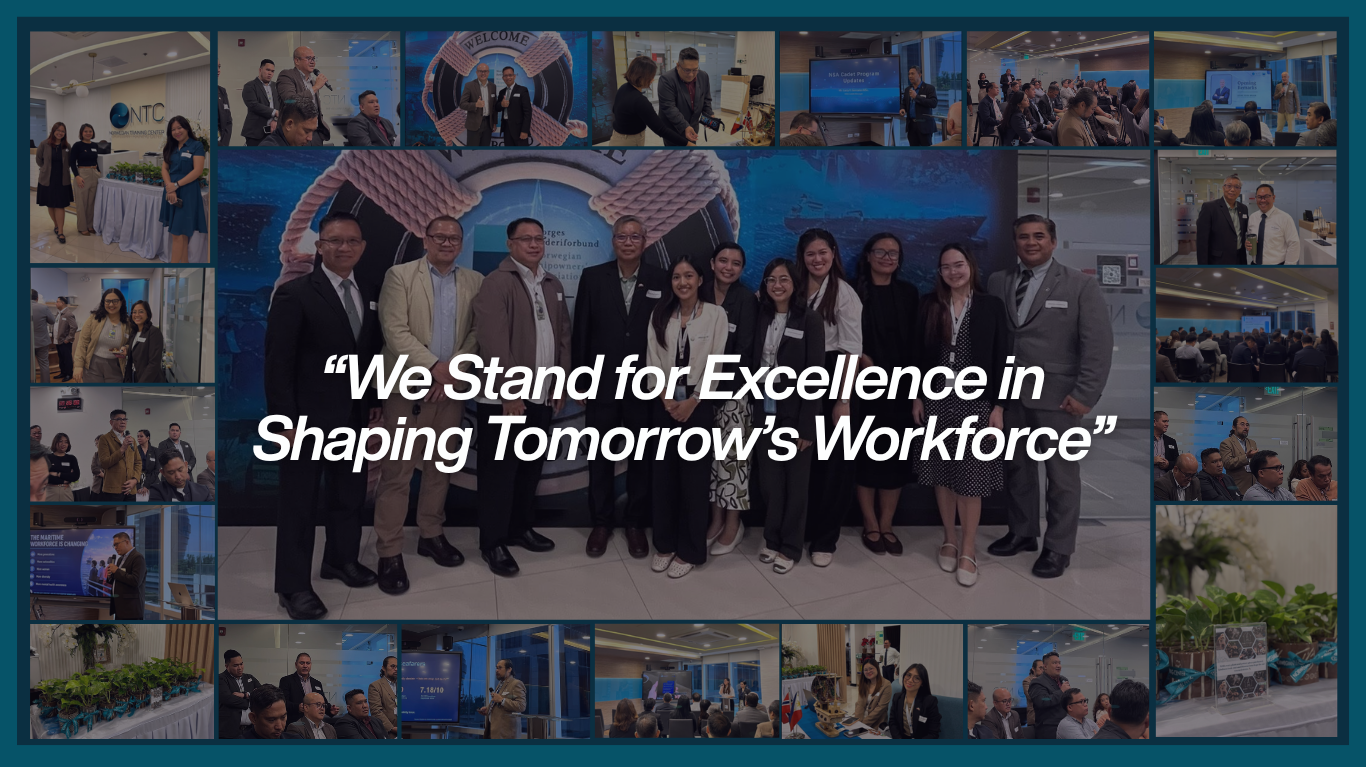
How often do we communicate, yet fail to truly connect? How many valuable insights go unheard because there is no platform to share them? In an industry driven by people, technology, and constant change, are we listening enough to the voices that navigate its future?
These questions underscore the importance of meaningful dialogue and collaboration, which served as the foundation of the NSA-NTC Clients Forum 2026.
Formerly known as the NSA-NTC Clients Meeting, this gathering marked a shift with its transition into a Clients Forum. Beyond a change in name, it embraced a more open, discussion-driven approach, creating a platform where every voice was heard, and every insight mattered. This reflects NSA-NTC’s commitment to strengthening partnerships through engagement, collaboration, and the exchange of ideas that drive the maritime industry forward.
The forum opened with discussions on developing future-ready marine engineers through specialized technical and electrical training, with Engr. Emmanuel Se. Participants explore how industry-focused programs, including reefer technicians training, continue to bridge the gap between evolving operational requirements and onboard competencies.
Building on this, Capt. Sherwin Bacolcol examined a growing industry concern in the second session, focusing on the rising trend of early career exit among seafarers. Discussions highlighted that this challenge goes beyond manpower concerns, pointing instead to a broader issue of human sustainability. Emphasis was placed on leadership, workplace culture, career development, and employee well-being in creating an environment where maritime professionals feel supported and valued throughout their careers.
The conversation further highlighted the importance of investing in the next generation of maritime professionals through insights shared by Sir Larry Gonzales. Updates on the NSA Cadet Program showcased ongoing efforts for aspiring seafarers, preparing them for the demands and opportunities of a dynamic maritime industry.
As workforce expectations evolve, Mr. Michael Jimenez, licensed psychologist, also explored wider themes such as mental health awareness, generational inclusion, and the value of diverse perspectives in maritime operations. These discussions reinforced that a resilient workforce depends not only on technical competence, but also on environments where individuals can grow, contribute, and belong.
Beyond the discussions, NSA-NTC’s commitment to extending its impact beyond the maritime sector was also evident. As a special initiative, guests received potted plants sourced from Pawttery, a social enterprise supporting animal welfare. Proceeds from Pawttery products help provide care for rescued dogs, allowing the forum to contribute to a meaningful cause while promoting sustainability and community engagement.
Overall, the exchange of ideas reinforced a shared understanding: shaping tomorrow’s workforce requires continuous learning, strong leadership, meaningful partnerships, and a genuine commitment to people.
NSA-NTC extends its sincere gratitude to all partners, speakers, and participants whose engagement made this Clients Forum a success. Together, we continue to shape opportunities, strengthen the workforce, and advance a shared vision of excellence in shaping tomorrow’s maritime professionals.
_1_7553060326024329.jpg "Crisis Management Seminar 2026 Set to Bring Together Maritime Professionals")
This September, the Norwegian Training Center, in partnership with Klaveness Ship Management and Gard, will convene a seminar aimed at strengthening collaboration and advancing professional development within the maritime sector.
In an industry where operational demands and global maritime activities continue to grow in complexity, strong leadership, clear communication, and crisis preparedness remain essential to ensuring safe, efficient, and compliant vessel operations across all levels of operation.
The seminar brings together maritime professionals and key industry stakeholders to examine proven strategies, exchange practical insights, and explore established best practices in managing high-pressure scenarios and emergency situations at sea. The program is structured to facilitate meaningful knowledge exchange rooted in real-world maritime operations and evolving industry challenges.
Through collaborative learning sessions and expert-led discussions, the event aims to deepen operational understanding and enhance decision-making capabilities across maritime teams. Ultimately, it seeks to strengthen sector-wide operational readiness while reinforcing a sustained culture of safety, resilience, and accountability within maritime organizations.
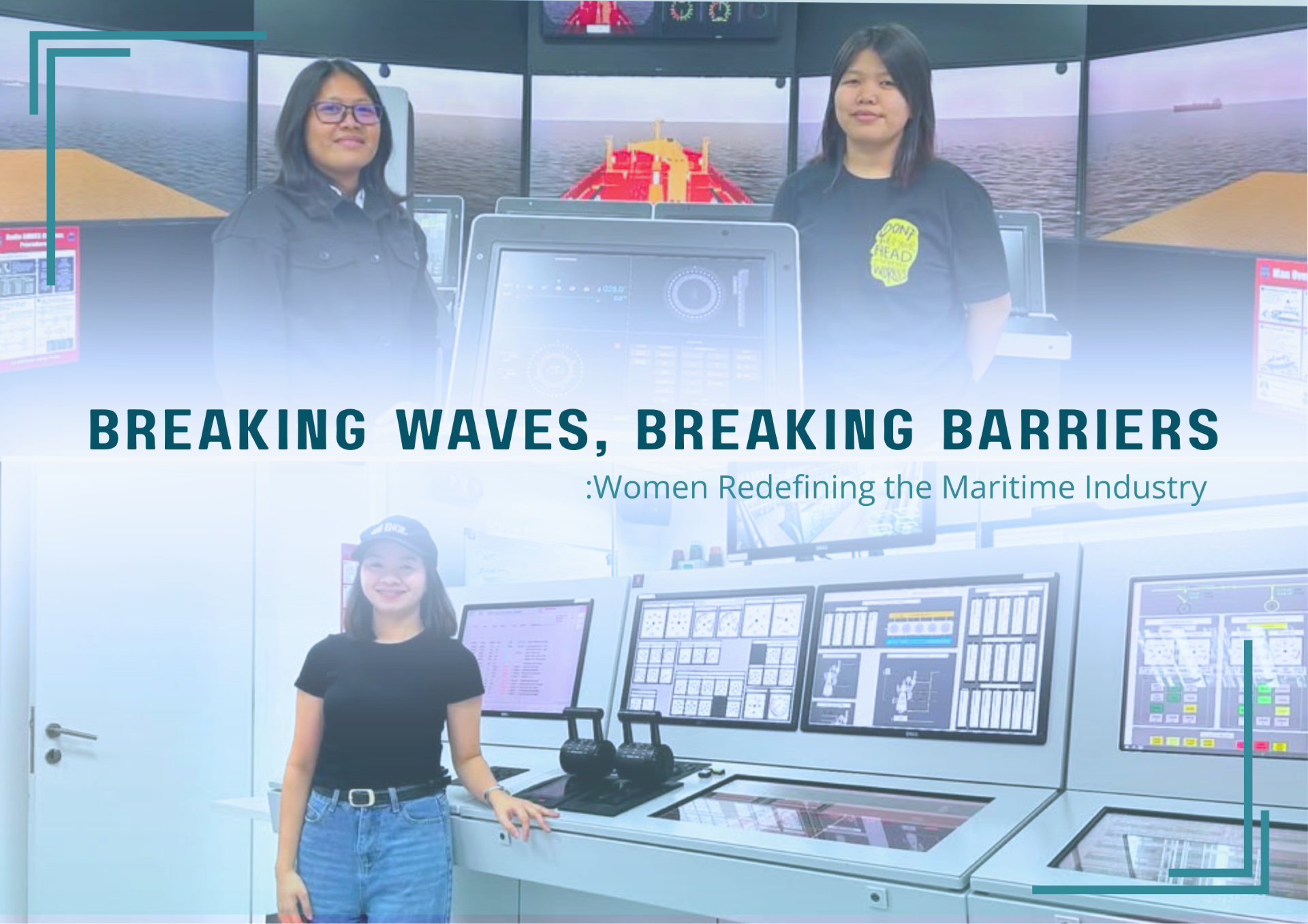
For decades, the maritime industry has long been viewed as a profession dominated by men. From navigating vast oceans to operating massive vessels, life at sea was often associated with physical strength, endurance, and traditionally masculine roles. Women who dared to enter the field were once considered exceptions rather than equals.
Today, however, the tides are changing. Minds have become more open, and diversity is now more widely embraced within the industry. According to the 2024 Women in Maritime Survey conducted by the International Maritime Organization (IMO) and the Women’s International Shipping & Trading Association (WISTA), the number of women working in the maritime sector continues to grow globally. While women remain underrepresented, making up only around 1% of the world’s seafarers, the study highlights increasing efforts from companies and organizations to create more inclusive and supportive workplaces for women at sea.
This gradual shift is now becoming visible across fleets worldwide, where more women are stepping aboard ships, not merely to participate, but to lead, contribute, and thrive. The maritime industry continues to evolve into a more diverse and inclusive environment, proving that competence and leadership are never defined by gender.
As the world celebrates International Women in Maritime Day, stories from women seafarers highlight not only their struggles, but more importantly, their resilience, excellence, and sense of purpose at sea.
One second officer shared how the presence of women on board positively changes the shipboard environment. According to her, being the only woman on board most of the time made her notice how male crew members often become more mindful of their words and actions, creating a more respectful and balanced atmosphere.
“Men tend to become more cautious and respectful when women are on board. They become more mindful of their actions and know their boundaries,” she shared.
Despite this progress, she acknowledged that challenges still exist. There were moments when some people belittled her or looked down on her capabilities. Still, she remained consistent, professional, and determined to prove herself through her work.
“You just need to push through and keep showing up” she said.
Meanwhile, another officer echoed the same sentiment, describing women on board as“neutralizers” who help create harmony and balance within the crew dynamic. She also highlighted how shipping companies are becoming more intentional in promoting diversity and inclusivity. Meanwhile, some male crew members noted that the bridge becomes neater and more orderly with the presence of women on board.
In her current company, one of the policies requires a minimum of two women on board, which she described as a positive initiative because it allows women seafarers to have someone with whom they share common ground and can relate to more easily. For her, this growing representation is proof that the maritime sector is slowly but steadily opening more doors for women.
At the same time, she emphasized that life at sea ultimately requires adjustment, discipline, and perseverance from everyone, regardless of gender. While there are tasks men may do better and others in which women may excel, she believes that success on board depends not on gender, but on individual capability, mutual respect, and teamwork.
“There are things men can do that women cannot, and there are also things women can do that men cannot. At the end of the day, everyone contributes something valuable. Each person brings valuable skills that help build a stronger team capable of navigating even the toughest waters.”
While a fourth engineer reflected on the personal strength required to survive and succeed in the engine department, one of the most demanding areas on board. She admitted that challenges remain part of the journey, especially as the only woman on board her current vessel, but maintaining professionalism, setting clear boundaries, and staying focused on one’s purpose are essential.
For many women in maritime, it is no longer just about passion. It becomes a calling, a purpose discovered while being at sea. This is the deeper reality for many women in the industry: they are not simply fighting for representation; they are building careers, discovering purpose, and proving that they rightfully belong in the maritime sector.
The increasing presence of women in maritime signifies more than diversity statistics. It represents progress, transformation, and the breaking of long-standing stereotypes. Women seafarers continue to show that strength is not measured solely by physical capability, but also through resilience, leadership, adaptability, and courage.
As more women navigate oceans and take on roles once deemed impossible for them, they inspire future generations to pursue careers free from societal limitations. The maritime industry may have started as a male-dominated profession, but today it is becoming a space where both men and women can work together, learn from one another, and steer the industry toward a more inclusive future.
This International Women in Maritime Day serves as a reminder that the sea has no gender. What truly matters is the passion, skill, and dedication of people brave enough to sail beyond the horizon.
_3014010625040520.png)


